Restore Your Sewer Line From the Inside — No Full Dig-Up Required
Trenchless Pipe Lining Services in LA & Orange County, California
A sewer line doesn’t have to collapse to be a problem. Deterioration happens gradually: a hairline crack widens, a joint shifts, scale thickens along the pipe wall, and each stage shows up as another clog, another slow drain, another call for service. Snaking or jetting clears the debris in front of you, but it doesn’t touch what’s happening to the pipe itself.
Fanti Sewer & Drains repairs qualifying sewer and drain lines from the inside out using trenchless pipe lining. Our process covers camera inspection, full interior cleaning, surface preparation, liner installation, curing, connection reinstatement, and a final camera pass to confirm the repair, all without opening up the yard, driveway, or foundation in most cases.
Not every damaged pipe is a lining candidate. We run the camera first and walk you through what it shows before recommending a repair path.
When the Pipe Itself Is the Issue, Not Just the Clog
Most sewer trouble doesn’t start as a full blockage — it starts as wear. A cast iron line begins to rust from the inside. Joints that were tight for decades start to separate. A root finds a hairline gap and grows into it. Grease clings to a rough patch and slowly narrows the opening. None of this shows up until the symptoms repeat.
Clearing the line gets water moving again, but it doesn’t stop the underlying deterioration from continuing.
Fanti Sewer & Drains doesn’t stop at the clog. We run a camera through the line to find out what’s actually causing the repeat visits.
The solution
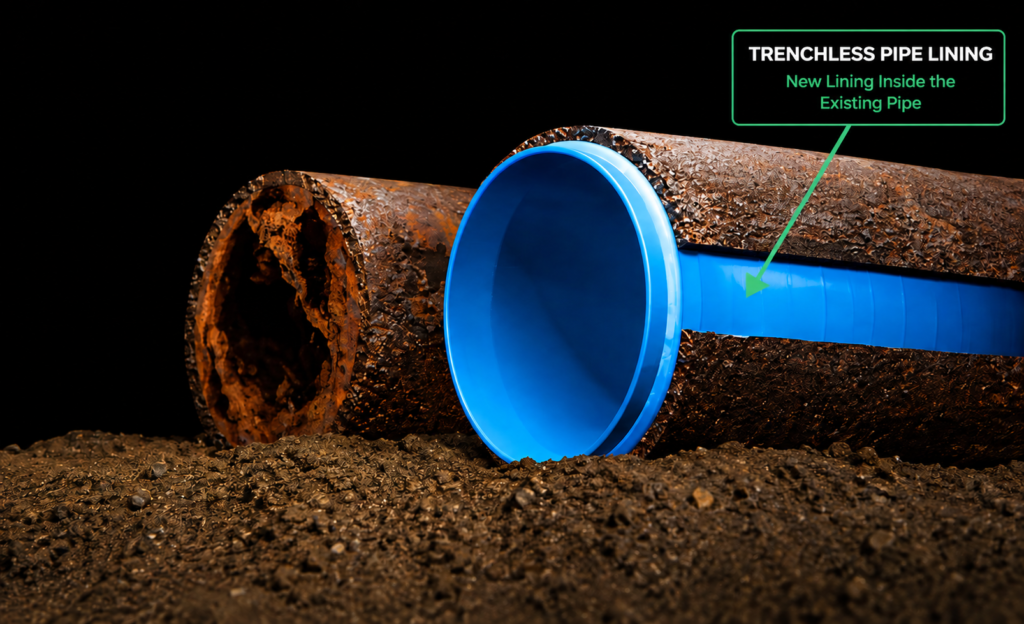
Trenchless pipe lining builds a new interior surface inside your existing sewer or drain line. Once the pipe is inspected, cleaned, and prepped, we install a resin-saturated liner through an access point, press it against the pipe wall, and cure it in place. In the industry, this method is known as cured-in-place pipe lining, or CIPP.
CIPP isn’t a spray-on coating, it’s a structural liner formed inside the host pipe. That means the condition of the original pipe still matters. Lining won’t correct a pipe that’s collapsed, badly deformed, out of slope, or no longer offers a clear path through.
Precision Lining Installation, Start to Finish
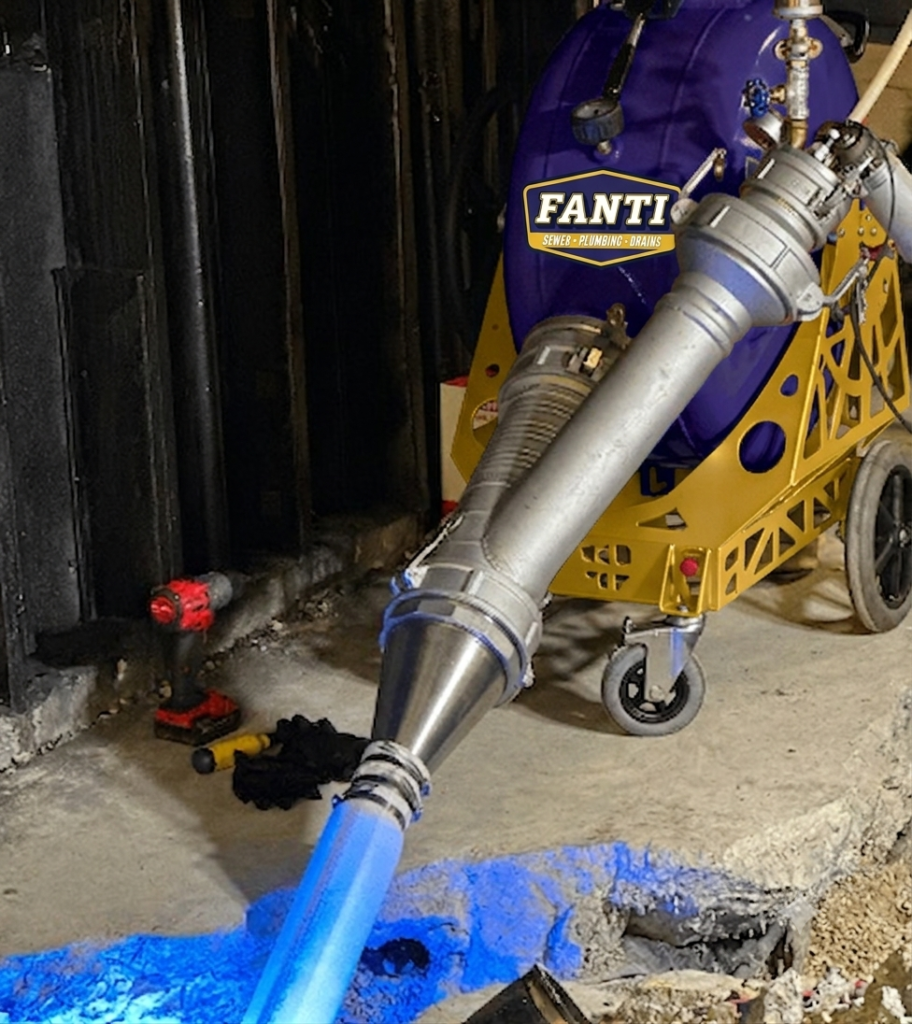
Fanti Sewer & Drains uses professional-grade inversion and lining equipment built for controlled CIPP installation. Every liner is measured, wet out, positioned through the access point, and held firmly against the host pipe until cure is complete.
We account for liner sizing, resin selection, and pressure control at every step, with one target: a smooth, continuous liner through the full repair section, no wrinkles, no folds, no misalignment.
Where the liner covers an existing branch connection, we reopen it afterward using robotic cutting or another method suited to the job.
Controlled Inversion Pressure
The liner is held tight against the pipe wall using regulated air or water pressure throughout the cure, so it takes the shape of the host pipe from end to end.
Resin-Saturated Liner
Each liner is a felt or composite material fully wet out with the correct resin system under controlled shop conditions before it ever goes into the pipe.
Matched Diameter and Length
We size every liner to the specific pipe diameter, repair length, bends, access points, and branch layout, no generic fits.
Inversion or Pull-In Placement
Depending on the pipe and the repair, the liner goes in either by inversion or by pulling it into position through the access point.
Managed Cure Cycle
Cure time and method are matched to the liner and resin system so the finished surface reaches full hardness before the line goes back into use.
Final Camera Verification
Once cured, we run the camera again to confirm the liner's continuity, verify terminations, and check that reopened connections are clean.
Warning Signs
How to Tell If Your Line Needs More Than a Cleaning
A single backup is rarely a lining situation on its own. But when the same symptoms keep coming back, especially right after a cleaning, it’s usually time for a full camera inspection.
- The same drain line clogs again and again
- Roots return not long after cutting or jetting
- Drains slow down again within weeks of being cleared
- Toilets gurgle or bubble when other fixtures are used
- Multiple fixtures back up together
- Sewage surfaces in a tub, shower, or floor drain
- Camera footage shows cracks, corrosion, holes, or open joints
- Sections of pipe hold standing water from buildup
- Sewer odor returns with no clear fixture cause
- Older cast iron pipe flakes rust and scale during cleaning
- The property has a history of repeated sewer repairs in the same spot
- The line runs beneath a slab, driveway, patio, or finished landscaping
Cleaning on repeat is often just managing symptoms. If the pipe wall itself is failing, the fix has to address the pipe, not just what’s inside it.
Our Process
How We Performs Trenchless Pipe Lining
We treat inspection, cleaning, prep, installation, curing, reinstatement, and verification as one connected repair, not separate jobs.
01
Camera Inspection
We run a sewer camera through the accessible line to map cracks, root intrusion, scale, offsets, joint separation, holes, standing water, branch connections, and prior repairs. This tells us whether the pipe qualifies for lining and what length, diameter, and access the job will need.
02
Locate and Map the Line
Using surface locating equipment, we trace the pipe's path and pinpoint the damaged section, confirming depth, access points, nearby branches, and whether any limited digging will still be needed.
03
Clear Roots, Scale, and Debris
We use hydro jetting, mechanical descaling, chain knockers, root cutting, or specialty nozzles as the situation calls for. The goal isn't just flow, it's a pipe wall ready to accept a liner.
04
Re-Inspect After Cleaning
A second camera pass shows what heavy buildup was hiding, cracks, holes, wall loss, offsets. This confirms the lining plan still makes sense before we move forward.
05
Prep the Liner
We select and prepare a liner sized to the exact diameter, length, and geometry of the repair, then saturate it with the correct resin system under controlled conditions. Timing, measurement, and resin handling all matter here.
06
Install the Liner
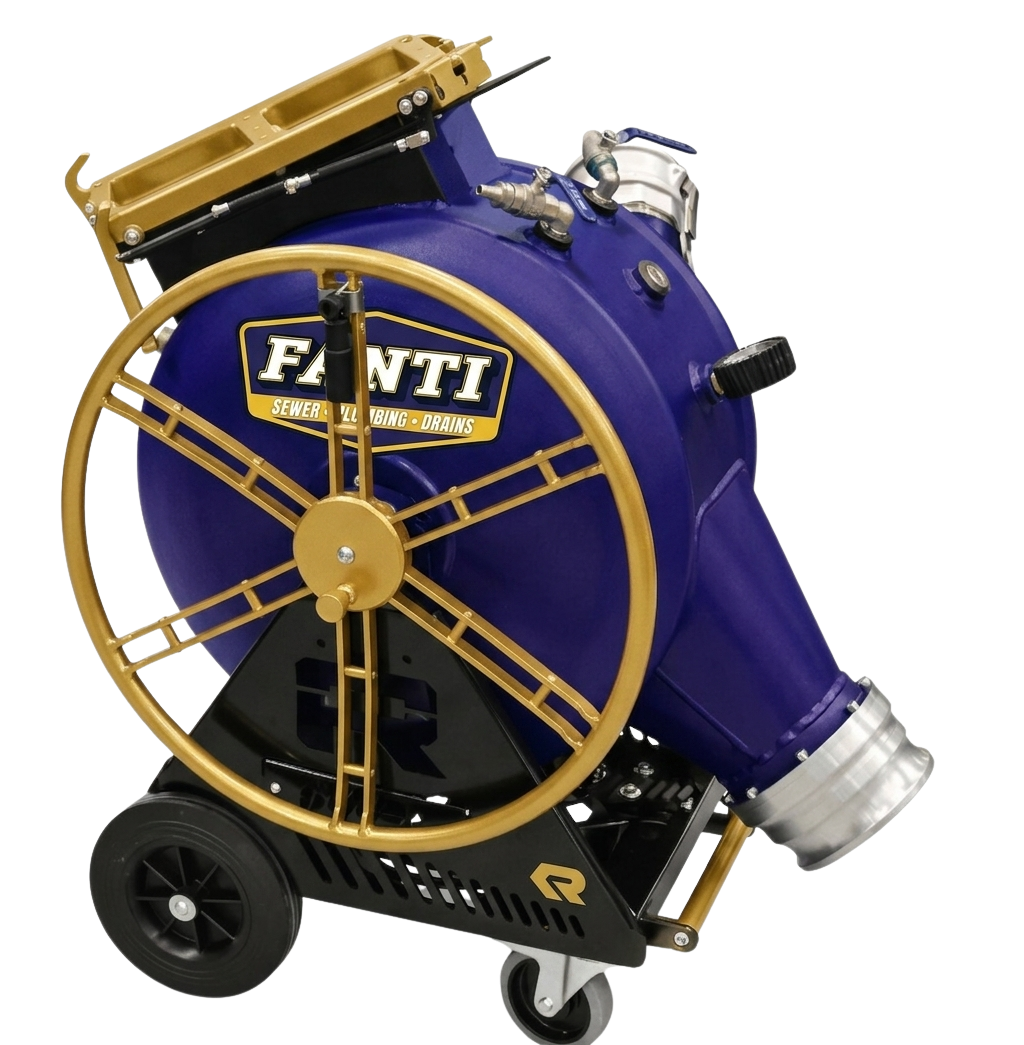
The liner goes in through the planned access point and is positioned inside the host pipe, inverted or pulled into place, depending on the setup, so it runs continuously through the repair with no folds or twists.
07
Press It Against the Pipe Wall
Controlled air or water pressure holds the liner firmly against the host pipe's interior during cure, so it conforms tightly along the full repair length.
08
Cure the Liner
The resin cures using the method appropriate to the system — ambient conditions, hot water, steam, or UV light. The line stays out of service until cure is fully complete.
09
Reopen Branch Connections
Any branch connection covered by the liner gets reinstated using robotic cutting or another suitable method, cut cleanly without damaging the surrounding liner.
10
Final Camera Verification
A last camera pass documents the finished liner, continuity, terminations, reopened connections, before the line goes back into regular use.
FAQ’s
Your Questions About Trenchless Pipe Lining Answered Here!
What exactly is trenchless pipe lining?
It’s a repair method that installs a resin-saturated liner inside your existing sewer or drain pipe, then cures it in place to form a new, continuous interior surface.
Is trenchless lining the same thing as CIPP?
CIPP — cured-in-place pipe — is the specific trenchless method we use. It refers to installing a resin liner inside the host pipe and curing it there.
Can a fully collapsed pipe be lined?
No. If a section is completely collapsed, crushed, or badly deformed, lining isn’t an option — the liner needs a clear pathway to install through.
Does lining stop root intrusion?
Roots have to be removed before lining happens. Once installed, the liner seals the cracks and joint gaps that let roots in to begin with.
Can old cast iron pipe be lined?
In many cases, yes, once the corrosion, scale, and loose debris are cleared out, the pipe still holds a usable shape for the liner.
Is cleaning required before lining?
Always. Grease, roots, scale, and rust have to be fully removed so we can inspect the pipe accurately and get a clean liner installation.
Will lining fix a bellied (sagging) pipe?
No. The liner follows the pipe’s existing path, it doesn’t correct low spots caused by settling or poor slope.
Does the liner shrink the pipe diameter?
Slightly, the liner adds an inner layer within the existing pipe. But the resulting surface is smoother, so flow often improves compared to a heavily corroded or scaled line, even with the small reduction in diameter.
Next Step
Tired of Fixing the Same Sewer Problem Twice?
If the same line keeps backing up, roots, grease, and debris might not be the real story. The pipe itself could be cracked, corroded, or coming apart at the joints.
Fanti Sewer & Drains will run the camera, show you exactly what’s happening inside your line, and tell you straight whether trenchless lining is the right call.