Know What’s Wrong Before You Pay to Fix It
Sewer Camera & Video Pipe Inspections Serving LA & Orange County, CA
A backed-up sewer line can mean a dozen different things — grease buildup, root intrusion, scale in an old cast iron pipe, a cracked joint, a low spot holding water, or a section that’s starting to collapse. From above ground, they can all look identical.
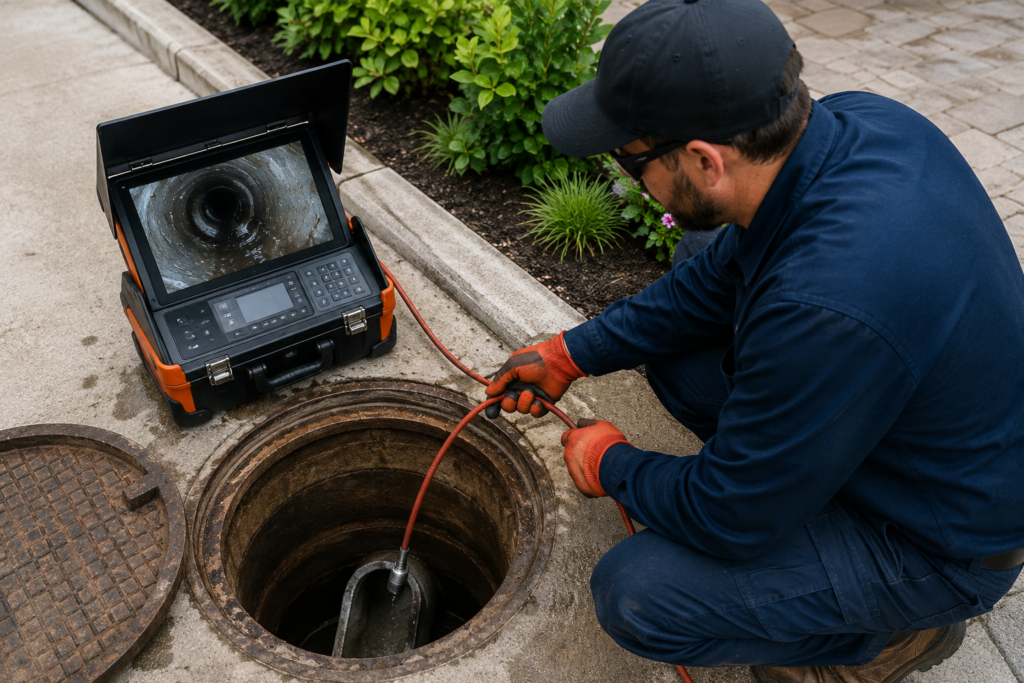
Fanti Sewer & Drains runs high-resolution sewer camera equipment through your drain and sewer lines to find out exactly what’s going on inside. We locate the defect, show you what the camera sees, and use that footage to recommend the right next step — not the most expensive one.
We don’t diagnose a pipe from guesswork. We look at it first.
A camera inspection gives you a visual read on pipe condition. Some blockages have to be cleared first before we can get the camera through the full line.
One Sewer Symptom, Several Possible Causes
A slow drain isn’t always grease.
A backup that keeps coming back isn’t always roots.
Water sitting in the line isn’t always a collapsed pipe.
The symptom tells us where to look. The camera tells us what’s actually happening.
Without an inspection, you could end up paying to clear the same clog over and over without ever knowing why it returns — or get talked into a full pipe replacement when the line could simply be cleaned or relined.
Fanti Sewer & Drains uses video inspection to tell the difference between a one-time stoppage and a real, underlying pipe problem.
Recurring Blockage
The same spot clogs again and again because roots, scale, a crack, an offset joint, or a rough interior wall keeps catching debris.
Slow Flow
Grease, corrosion, mineral buildup, sludge, or a deformed pipe wall is narrowing the usable space inside the line.
Multiple Fixture Backup
When several fixtures back up at once, it usually points to a shared building drain or sewer lateral issue, not one clogged fixture.
Standing Water
Water sitting in the pipe can mean poor slope, a bellied section, an obstruction, or a restriction further downstream.
Sewer Odor
Ongoing odor can come from a damaged connection, trapped debris, an open joint, or a drainage issue that isn't visible from the surface.
Previous Repair Failure
Our camera can catch a failed patch, a misaligned repair, incomplete cleaning, a separated coupling, or a liner that didn't seal properly.
When to Inspect
Signs You Need a Sewer Camera Inspection
A video inspection makes sense once symptoms go beyond a single clogged fixture, or when you need to confirm pipe condition before committing to a repair.
the same line keeps backing up
jetting or cabling only fixes it temporarily
roots have already been cut out more than once
more than one fixture drains slowly at the same time
toilets gurgle when you run water elsewhere
wastewater backs up into a tub, shower, or floor drain
your home has original cast iron or clay sewer pipe
you're weighing trenchless lining as an option
a contractor needs to pinpoint a buried defect
a commercial property keeps getting drain complaints
you're buying a home and want to know the sewer lateral's
a remodel might disturb existing drain piping
you need proof the line is clear after cleaning
you want documentation after a repair is finished
the pipe route or connection layout is unclear
A camera shows us what’s visible inside the pipe. It can’t see through standing wastewater, thick buildup, or a total blockage until that’s cleared first.
Our Process
How Fanti Sewer & Drains Runs a Video Pipe Inspection
01
Talk Through the Symptoms
We start with what's happening — which fixtures back up, when it happens, past repairs, known cleanouts. This tells us whether we're dealing with a local clog or a bigger sewer line issue.
02
Find the Right Access Point
We pick the best entry point — a cleanout, drain opening, manhole, or another approved access — since it determines how much of the line we can actually see and how precisely we can locate anything we find.
03
Clear the Line if Needed
The camera can't push through every blockage. If the line's fully clogged, we'll jet, cable, cut roots, or pump it clear first so the inspection can continue.
04
Run the Camera Through the Pipe
We advance the camera slowly and deliberately, watching the pipe wall, joints, fittings, branch connections, water level, and any buildup or damage. We pause on anything worth a closer look instead of rushing past it.
05
Track Distance and Pipe Direction
As the camera moves, we log footage and note pipe direction changes. Where our locating equipment can pick up a signal, we mark the surface position of any defect we find.
06
Record What We Find
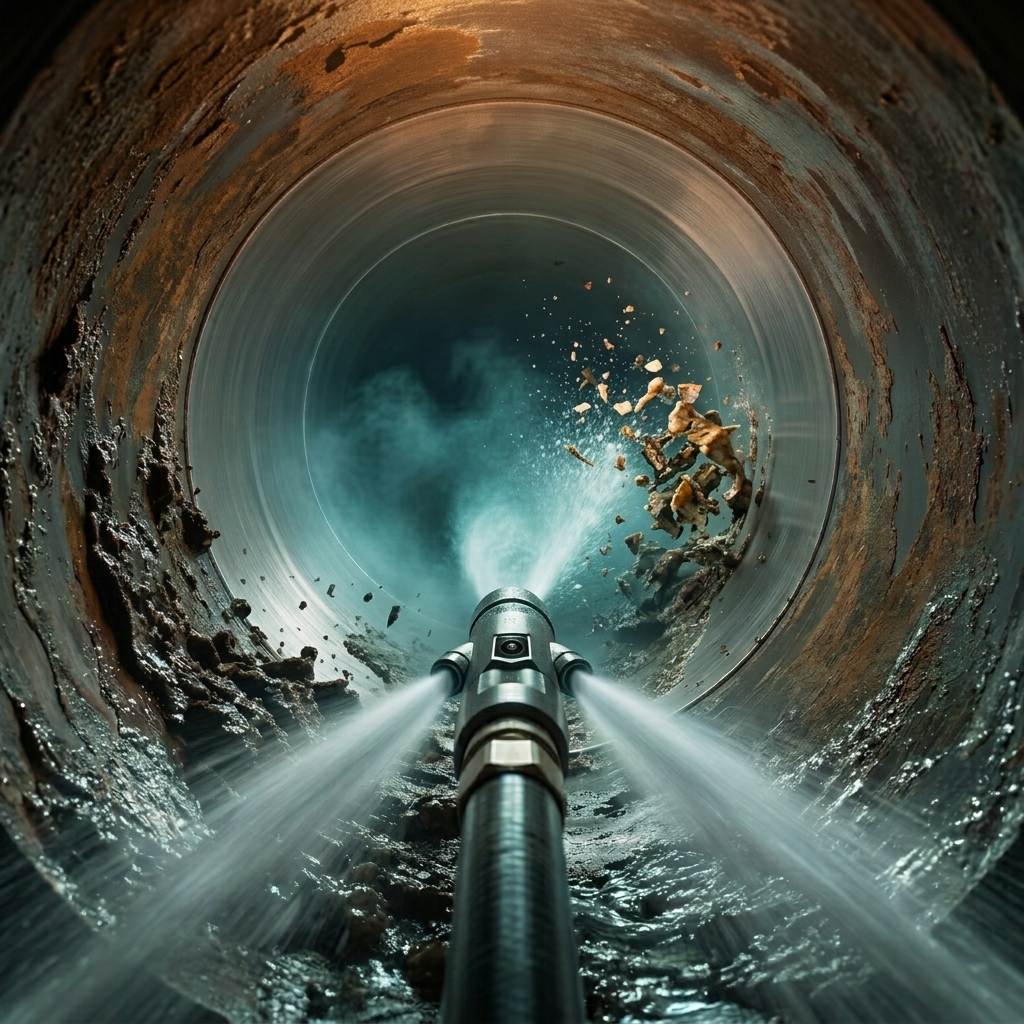
Roots, cracks, offset joints, corrosion, holes, standing water, old repairs, and any other notable finding gets documented for you to see.
07
Pull Back and Double-Check
We withdraw the camera slowly so we can view the line again from the other direction — a crack or defect can look different depending on which way you're viewing it from.
08
Walk You Through It
Fanti Sewer & Drains explains exactly what the footage shows, what's still uncertain, and how it shapes our recommendation.
09
Give You a Clear Recommendation
Depending on what we find, that could mean cleaning, descaling, root removal, trenchless lining, spray lining, a sectional repair, excavation, full replacement — or simply confirming there's nothing to fix right now.
FAQ’s
Your Questions About Sewer Inspections Answered Here!
What is a sewer camera inspection?
It’s a waterproof camera run through your drain or sewer line on a push cable, letting us see roots, grease, cracks, corrosion, offsets, blockages, and standing water directly instead of guessing.
Can a camera find the exact location of a sewer problem?
Often, yes. Our equipment includes a transmitter we can pick up from the surface, letting us estimate depth and location. Soil, nearby utilities, pipe depth, and signal interference can all affect how precise that estimate is.
Can the camera inspect a completely clogged sewer?
Not always. A complete blockage can stop the camera cold — we’ll typically need to clear or clean the line first before running a full inspection.
Can a sewer camera see through water?
Yes — the right nozzles and cutting tools handle most root intrusion. But cutting the roots out doesn’t fix the crack or joint they grew through, so we always follow up with a camera to check.
Can a camera find roots?
It can work through shallow water, but the picture gets murky fast once the lens is submerged or the water’s cloudy. Deep standing water can block a clear view of the pipe wall.
Can a camera confirm a sewer belly?
Yes, in almost every case where we can reach that section of pipe — and it’ll usually show us the crack or joint the roots came in through, too.
Can a camera find cracks in cast iron?
Yes, along with corrosion, scale, holes, and wall loss — as long as buildup isn’t hiding the pipe surface. Heavy scale may need to come out first.
Should the sewer be cleaned before inspection?
Depends on why you’re inspecting. A first pass often helps us locate the blockage and plan the cleaning. A second inspection afterward confirms the pipe wall underneath is actually sound.
Get Started
Get a Clear Answer, Not a Guess
A backup that keeps returning, a slow drain, or a sewer line you’re worried about shouldn’t be diagnosed by guesswork. Fanti Sewer & Drains will inspect the accessible line, show you exactly what we find, and tell you straight whether the next step is cleaning, maintenance, lining, repair, or replacement.