Hydro Jetting
Hydro Jetting and Drain Cleaning in LA & Orange County, California
Most clogged drains aren’t caused by a single object stuck in the line. Grease builds up along the walls. Roots work their way in through a joint. Cast iron fills with rust and scale over the years. Sludge, sand, soap residue, and food waste layer up slowly until the pipe simply can’t carry what it used to.
Fanti Sewer & Drains uses professional-grade drain cleaning equipment, sewer cameras, mechanical tools, and hydro jetting to remove what’s actually causing the restriction. We don’t just punch a small hole through the clog and call it done; we inspect the pipe, pick the right cleaning method for what we find, restore flow, and confirm the result before we leave.
The right cleaning method depends on the pipe’s material, condition, diameter, access, and the type of blockage involved. We inspect before we bring in anything aggressive.
Why Drains Keep Slowing Down or Backing Up
A drain can look clear and still have buildup coating most of the pipe wall.
A cable can cut a narrow path through grease or roots and get water moving again — that solves the immediate stoppage, but it doesn’t remove the material sitting around that new opening. The buildup that’s left behind catches more waste, and the line starts slowing down all over again.
Sometimes the blockage is only half the story. The pipe itself may also have corrosion, cracking, separated joints, a low spot, or heavy internal scale.
Fanti Sewer & Drains asks both questions before calling the job done:
- What’s blocking the line right now?
- Why did the blockage form there in the first place?
Grease Buildup
Fats, oils, food residue, and soap collect along the pipe wall over time, narrowing the opening until flow slows or stops altogether.
Root Intrusion
Roots find their way in through cracks, joints, and damaged connections. Once inside, they catch paper and waste and keep growing.
Cast Iron Scale
Aging cast iron develops layers of rust and mineral scale. The interior gets rough and restricted, catching more debris as time goes on.
Sludge and Organic Deposits
Solids in wastewater settle out and build up, especially in low-flow sections or lines that haven't been maintained in a while.
Sand, Silt, and Sediment
Sediment collects in sewer, storm, and commercial drain systems, quietly eating away at how much the line can carry.
Foreign Objects
Wipes, rags, hygiene products, and packaging material get lodged in the line and block flow outright.
Construction Debris
Grout, concrete residue, dirt, tile scraps, and general jobsite debris can end up in drains during construction or remodeling work.
Failed Pipe Conditions
A crack, offset, collapsed section, bad slope, or deformed pipe can keep catching debris no matter how many times it's cleaned.
Warning Signs
Signs Your Drain or Sewer Line Needs Professional Cleaning
A single slow fixture is often a localized issue. Several fixtures acting up together usually points to a bigger problem in the building drain or sewer line.
Water drains slowly from more than one fixture
Toilets bubble or gurgle on their own
A shower or tub fills up when a toilet flushes
Wastewater shows up at a floor drain
Sewage backs up out of a cleanout
The same drain clogs over and over
A previous cabling job only helped for a little while
Foul drain odor persists after a normal cleaning
A restaurant drain keeps developing grease blockages
Roots have turned up in the sewer line before
Cast iron piping is shedding rust and scale
Camera footage shows a narrowed pipe diameter
Storm drains stay full well after rain has stopped
Commercial drains need service more and more often
Multiple tenants are reporting the same drainage problem
Repeat blockages usually mean something’s still sitting in the pipe, or there’s a defect that keeps giving debris somewhere to collect. Clearing the immediate stoppage isn’t always the same thing as cleaning the line.
Our Process
How Fanti Sewer & Drains Cleans a Sewer or Drain Line
Identification, access, inspection, method selection, controlled cleaning, debris management, and verification all happen as one connected process — not separate steps handled in isolation.
01
Identify the Affected System
We figure out whether the problem is limited to one fixture, one branch line, the main building drain, the sewer lateral, or a larger commercial system. That narrows down the work needed and points us to the right access point from the start.
02
Locate Safe Access
We find an appropriate cleanout, drain opening, manhole, roof vent, or other approved access point — one that lets the equipment in safely and gives loosened material somewhere to go.
03
Open the Stoppage When Necessary
If the line is fully blocked, we may first use mechanical cabling, a penetrating nozzle, a root cutter, or another tool just to get flow going again. That lets us evaluate conditions and move into controlled cleaning.
04
Camera Inspection
When access and flow allow it, we run a sewer camera through the line. This shows us grease, roots, scale, cracks, offsets, standing water, foreign objects, diameter changes, fittings, branches, and any past repairs — especially important before we bring aggressive cleaning to an older or visibly worn pipe.
05
Select the Cleaning Method
We choose the nozzle, hose, pressure, flow rate, insertion direction, and cleaning pattern to match the pipe and the blockage. A grease-heavy restaurant line doesn't get cleaned the same way as a root-filled clay sewer or a scaled-up cast iron building drain.
06
Begin Controlled Cleaning
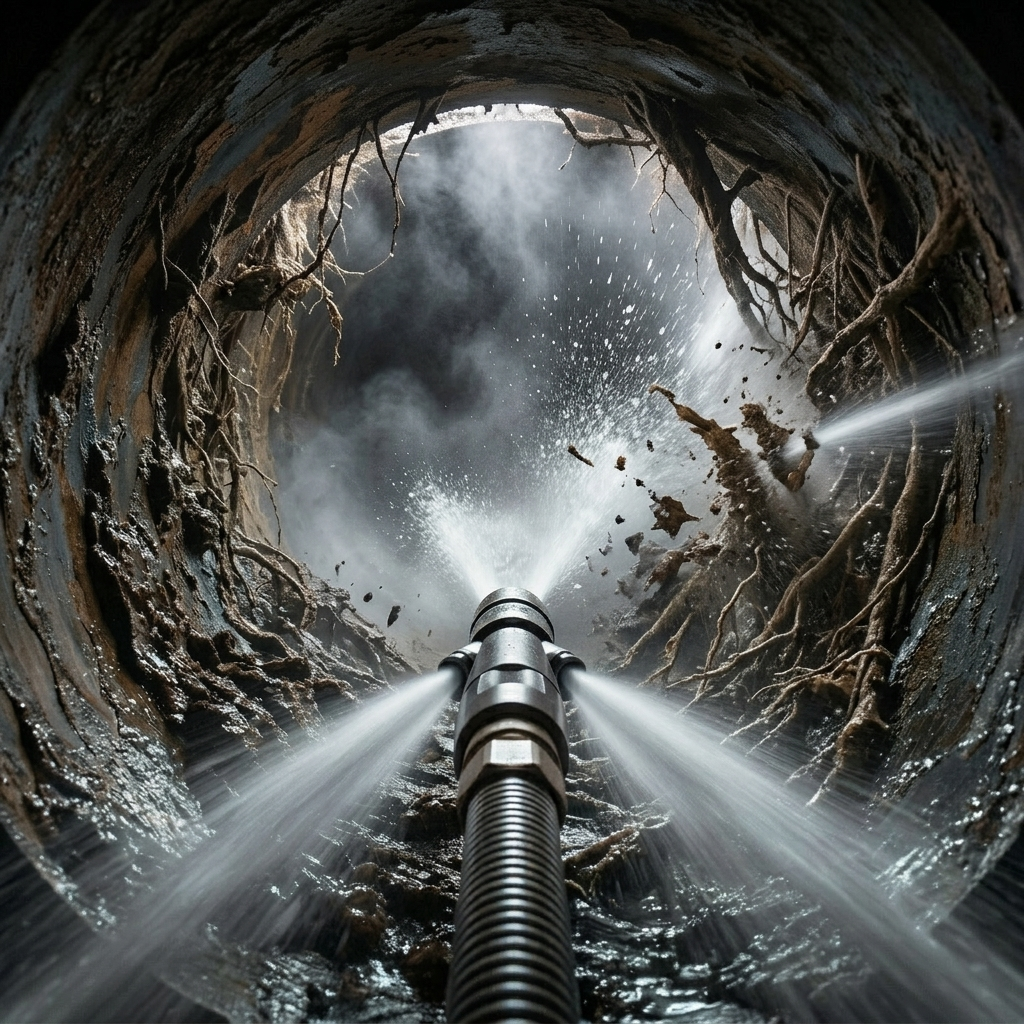
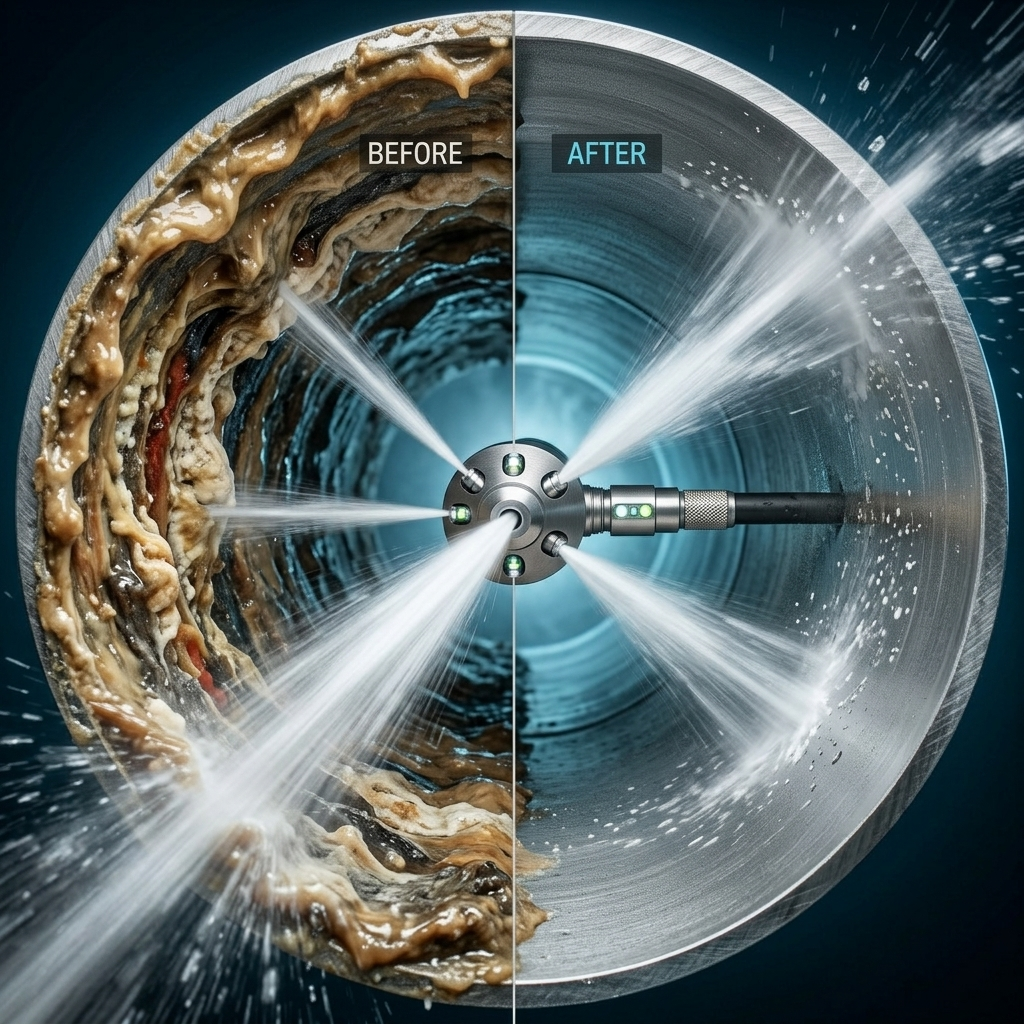
The nozzle moves through the line while pressurized water cuts, loosens, and flushes material out of the way. We control the hose's movement carefully so the nozzle actually works through the restriction instead of blasting past it.
07
Work the Full Affected Section
We may run the nozzle back and forth through the line multiple times. Repeated, controlled passes clean the full pipe wall and push loosened debris toward the access point or a downstream collection area.
08
Remove or Contain Debris
Once material is loosened, it has to go somewhere. Depending on the system, we flush it downstream, retrieve it through the access point, vacuum it out, screen it, or otherwise remove it from the work area entirely.
09
Reinspect the Pipe
After cleaning, we run the camera again whenever the scope and access allow it. This post-cleaning look shows the real condition of the pipe wall and can reveal cracks, corrosion, holes, separated joints, or other issues that were hiding under the buildup.
10
Explain the Result
We walk you through what came out of the line, what the pipe looks like now, and whether it needs ongoing maintenance, further descaling, root treatment, lining, repair, or replacement. Cleaning restores the best flow the existing pipe can give — it doesn't hide a defect that still needs attention.
FAQ’s
Your Questions About Hydro Jetting Answered Here!
What is hydro jetting?
Hydro jetting uses a specialized hose and nozzle to push pressurized water through a drain or sewer line. The water breaks up qualifying buildup and carries it out of the pipe.
Is hydro jetting better than snaking a drain?
They do different jobs. Cabling is good for breaking through or pulling out a localized obstruction. Hydro jetting is what you use when the whole pipe wall needs cleaning and flushing, not just a path punched through. We often use both together.
Can hydro jetting remove roots?
Yes — specialized nozzles and mechanical cutters can clear qualifying root intrusion. That said, removing the roots doesn’t fix the crack or joint they got in through, so we always inspect the line afterward.
Can hydro jetting remove grease?
Yes. It’s one of the most common uses for jetting in both residential and commercial lines. The nozzle, water flow, and cleaning pattern all get matched to the pipe and the type of buildup.
Is hydro jetting safe for old pipes?
It depends on the pipe’s condition. Age alone doesn’t rule out jetting, but pipe that’s severely corroded, cracked, deformed, or fragile needs a careful look first. We inspect before running aggressive cleaning on any line that shows wear.
Can hydro jetting damage a pipe?
Wrong pressure, the wrong nozzle, or poor technique can damage a vulnerable pipe. That’s why equipment selection and control matter — they need to match the pipe’s material, diameter, condition, and the blockage itself.
Does hydro jetting repair cracks?
No. Jetting cleans the inside of the pipe — it doesn’t fix cracks, separated joints, holes, collapse, or bad slope. Those need a repair method like lining, sectional repair, excavation, or replacement.
Will hydro jetting stop roots from returning?
It clears out the roots that are there now. If the crack or joint they entered through is still open, roots can come back. A camera inspection helps us find that entry point and figure out whether a repair is needed.
Get Started
Clear the Line and Find Out Why It Clogged
Stop paying to reopen the same small path through the same blockage. Fanti Sewer & Drains can identify the affected line, clear out grease, roots, scale, sludge, sediment, and other qualifying obstructions, then inspect the pipe to confirm whether cleaning solved the problem — or uncovered a repair that still needs attention.