Spray-in-Place Pipe Lining
Spray-in-Place Pipe Lining in LA & Orange County, California
Fanti Sewer & Drains uses spray-in-place pipe lining to rehabilitate qualifying sewer, drain, and waste piping from the inside, without removing the original pipe. Once the line is inspected, cleaned, and properly prepared, our crew applies a resin-based rehabilitation material directly onto the interior pipe wall using specialized equipment.
This method is often a strong fit for pipes dealing with internal corrosion, surface pitting, pinhole leaks, minor cracking, leaking joints, or buildup that keeps returning after cleaning.
Every line is inspected before we recommend spray lining. Pipes that are collapsed, badly displaced, or structurally compromised may need a different repair approach.
What Is Spray-in-Place Pipe Lining?
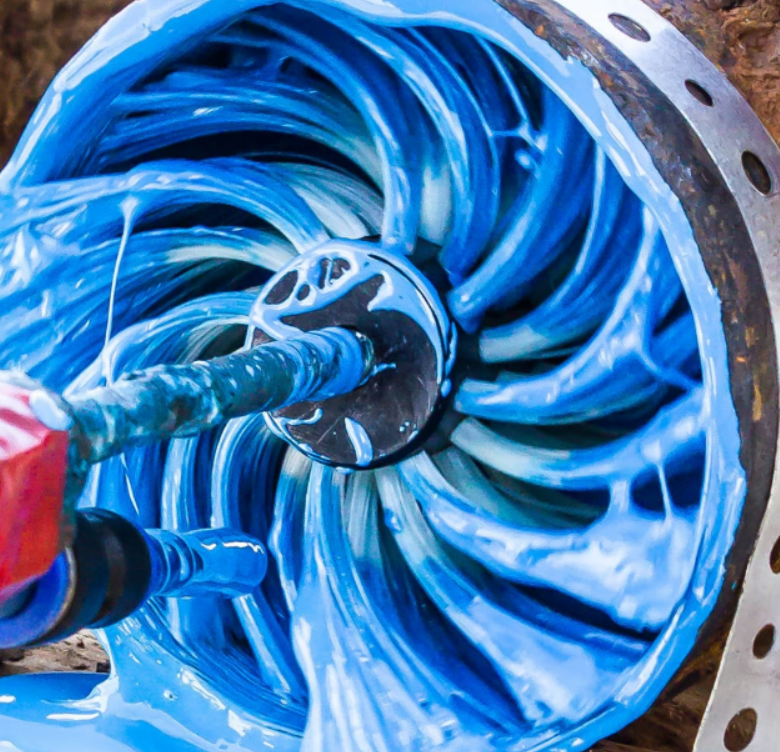
Spray-in-place pipe lining — usually shortened to SIPP — is a trenchless rehabilitation method that coats the interior of an existing pipe with a resin-based material. Rather than pulling a fabric tube through the line like CIPP, SIPP uses application equipment that travels through the prepared pipe while a spray head distributes material around the full interior circumference as it moves.
As the equipment is drawn through the line, we control the application rate, withdrawal speed, material flow, and spray pattern to keep the coating even and consistent. On some projects, more than one pass is used to reach the specified thickness or coverage.
Once cured, the applied material creates a new interior surface that separates the original pipe from wastewater, moisture, corrosive elements, and future buildup.
Important Distinction
Spray lining is not a coat of paint applied inside a pipe. A successful result depends on thorough cleaning, surface preparation, controlled material application, the right environmental conditions, proper curing, and post-installation verification.
Depending on the material chosen, the thickness applied, the pipe’s condition, and what the project calls for, a spray-applied lining can serve a protective, semi-structural, or fully structural role.
Controlled, Metered Application Every Pass
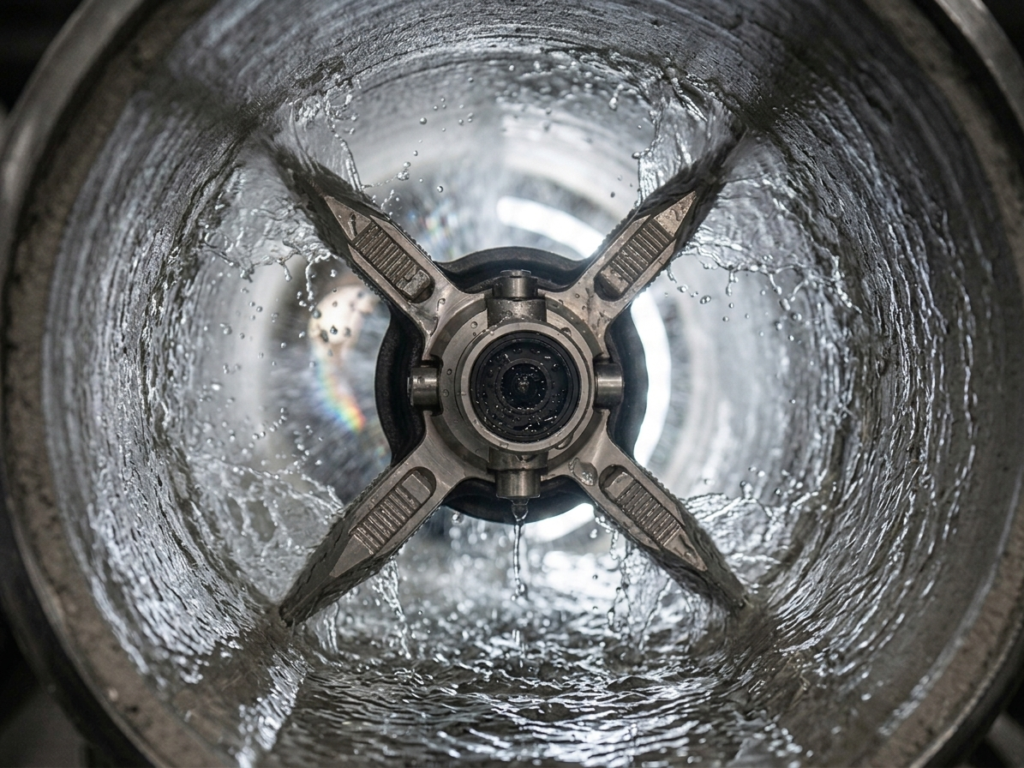
Fanti Sewer & Drains uses purpose-built spray lining equipment designed for precise in-pipe application. Our system meters and mixes compatible lining materials before sending them through a rotating spray assembly built for controlled, even coverage.
As the assembly is retrieved through the line, the rotating head distributes material around the pipe wall, letting the crew control coverage and build thickness based on the material spec and the condition of the pipe.
Material chemistry and mixing ratios are matched to the specific project — we don’t run a single product across every pipe condition.
Metered Material Delivery
Components are mixed and metered by the equipment itself, so material goes down consistently from the first foot of pipe to the last.
Full Circumferential Coverage
A rotating spray head coats the entire interior wall, not just the bottom channel where most flow-related wear occurs.
Works With Complex Geometry
Spray application handles bends, transitions, branch connections, and diameter changes that can be difficult for a tube-style liner to navigate cleanly.
Multiple-Pass Option
When a project calls for extra build thickness, we can run additional controlled passes using the specified material system.
Faster Cure Options
Depending on the resin system and site conditions, some materials cure quickly enough to help keep the line's downtime to a minimum.
CCTV Verification
Once the lining is complete, we run a camera through the line to document coverage, transitions, openings, and overall surface quality.
Candidacy
Pipe Conditions That May Be Candidates for Spray Lining
Spray lining is considered only after the line has been inspected and its defects have been identified. It is generally used to rehabilitate an existing pipe that still provides a viable pathway and can be cleaned and prepared for material adhesion.
Internal Corrosion
Cast iron and other metal pipe can lose material along the interior wall, scale up, and get progressively rougher. Cleaning followed by spray lining can seal the remaining pipe off from ongoing contact with wastewater.
Pinholes and Minor Leakage
A properly matched lining system can seal small perforations, localized porosity, and minor leak points, as long as the surrounding pipe is still a viable candidate for rehabilitation.
Leaking Joints
Once a line is stabilized, cleaned, and evaluated, spray-applied material can bridge and seal select joint leaks.
Surface Cracking
Minor cracking can often be addressed if the host pipe is still aligned and structurally capable of supporting the lining process. Crushed, collapsing, or heavily displaced sections need a different fix.
Recurring Buildup
A rough, scaled interior gives debris something to grab onto. After proper cleaning and prep, a smoother lined surface gives buildup less to catch on.
Corrosion at Bends and Transitions
Spray application can reach fittings, bends, and diameter changes where a fabric tube liner might fold or restrict flow.
Vertical Waste and Drain Lines
Depending on access, material, and code requirements, spray lining may be a fit for vertical drain and waste lines in multifamily, commercial, hospitality, or institutional properties.
Branching Drain Systems
Some branch layouts are well suited to spray lining because the material follows the pipe's existing shape. Every branch and transition still needs to be inspected and confirmed afterward.
Spray lining won’t fix everything. A pipe with a full collapse, missing section, severe deformation, major offset, poor slope, active ground movement, or a blockage that can’t be removed will likely need excavation, pipe bursting, sectional repair, or another method entirely.
Our Process
How Fanti Sewer & Drains Performs Spray Lining
We treat inspection, cleaning, prep, installation, curing, reinstatement, and verification as one connected repair, not separate jobs.
01
CCTV Inspection and Condition Assessment
We start with a camera inspection to document pipe material, diameter, access points, bends, branches, transitions, buildup, cracks, joints, offsets, deformation, and active leaks. This tells us whether the line is a good candidate for cleaning and spray lining. If the picture isn't clear, we may recommend additional testing or access before moving forward.
02
Access and System Planning
We work out how the equipment will enter the line, how the system will be isolated during the work, and how to manage wastewater or building operations while the job is underway. Existing cleanouts often provide enough access; some jobs need a temporary opening or limited excavation. Occupied buildings may need phased shutdowns, tenant coordination, containment, and protection of nearby finishes.
03
Cleaning and Deposit Removal
The lining is only as good as the surface underneath it. We strip out grease, scale, rust, mineral buildup, roots, and loose corrosion using hydro jetting, mechanical descaling, chain cleaning, or specialty cutting tools — whatever the pipe and its condition call for. Water flowing through the line doesn't mean the surface is ready for lining.
04
Surface Preparation
After the major deposits are gone, we further prep the pipe to create a stable base for the material. Leftover residue, moisture, or loose debris can interfere with adhesion and curing. Cast iron, clay, concrete, and PVC each get treated differently based on what the resin system requires.
05
Drying and Environmental Control
Most resin systems need controlled moisture and temperature to cure properly. We dry and ventilate the pipe as needed and check ambient conditions, pipe temperature, humidity, and any active water infiltration before introducing lining material.
06
Equipment Setup and Calibration
We prep the delivery equipment for the selected resin system — components, hoses, pumps, mixing setup, nozzle choice, and material temperature all get checked. Retrieval speed and application plan are set based on the pipe's diameter, geometry, and target coverage.
07
Spray Application
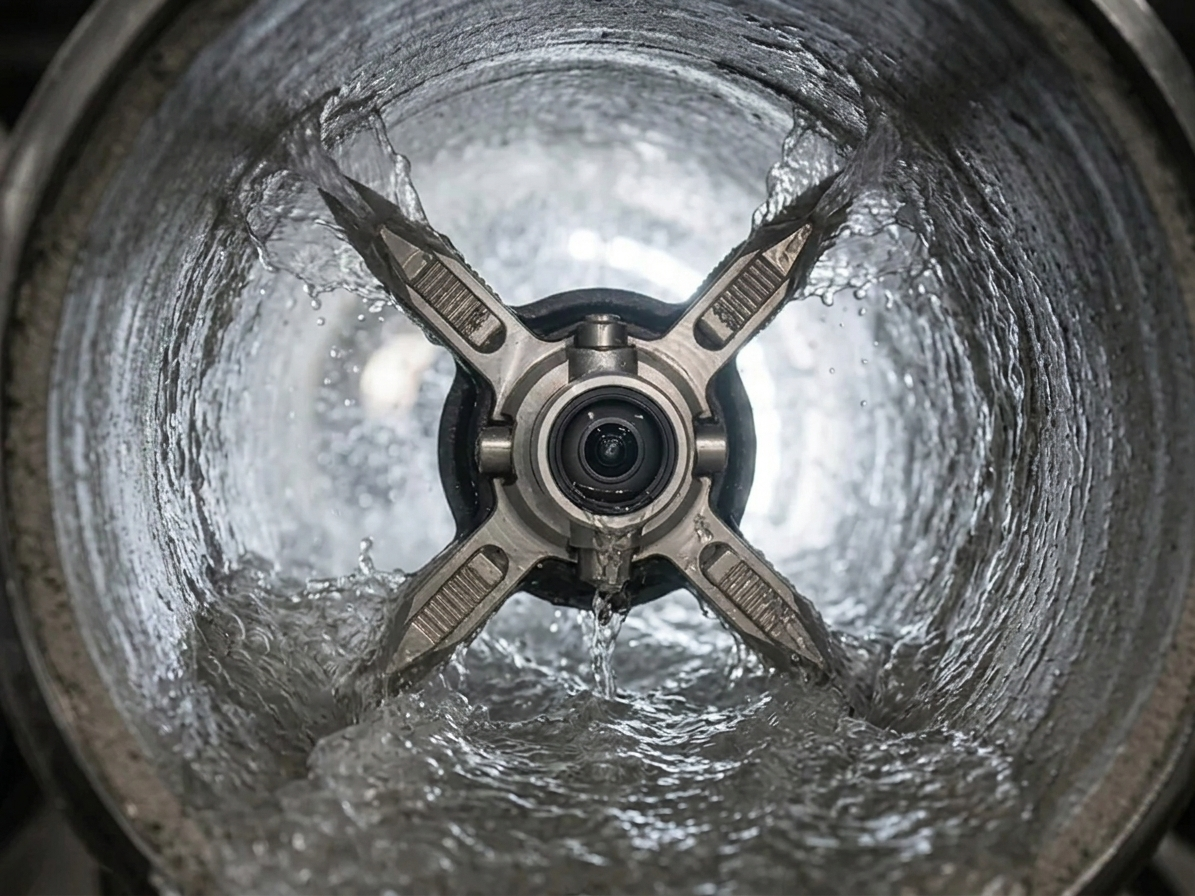
The spray assembly goes into the pipe, and the rotating head distributes mixed material around the full interior wall as the assembly is pulled back through the line at a controlled speed. We monitor delivery, equipment behavior, and coverage the entire time, adjusting for tricky transitions as needed.
08
Additional Passes When Required
Some jobs call for more than one application pass. We only add layers when the material system and installation plan call for it — thickness isn't a guess, it's based on the material, pipe condition, and what the rehabilitation needs to accomplish.
09
Controlled Cure
The applied material cures using the method appropriate to the resin system — ambient air, controlled heat, or another method — with the line kept out of service until cure is fully complete.
10
Post-Lining CCTV Verification
Once everything's cured, we run a final camera pass to check coverage, surface continuity, transitions, bends, branch openings, and overall condition of the finished lining. We confirm every opening is clear and functioning before handing the line back over, with documentation available if needed.
FAQ’s
Your Questions About Spray-in-Place Pipe Lining Answered Here!
Is spray lining the same as CIPP?
No. Spray-in-place pipe lining applies resin-based material directly to the prepared interior surface of the existing pipe. CIPP installs a resin-saturated tube inside the host pipe and cures that tube into place. Fanti Sewer & Drains evaluates the pipe before recommending either method.
Is spray lining structural?
It depends on the material, the thickness applied, the condition of the host pipe, and the project’s requirements. It can be protective, semi-structural, or fully structural — we don’t label every installation the same way.
Can spray lining repair a collapsed pipe?
No. A collapsed, crushed, or badly deformed section generally needs a different repair method. The pipe has to offer a workable path that can be cleaned, prepped, lined, and verified.
Does spray lining work in cast iron pipe?
Cast iron is often a good fit once internal corrosion and scale can be cleared out and the remaining pipe is sound enough for rehabilitation. We inspect and mechanically prep the line before recommending lining.
Can the material go around bends?
Yes, in many cases. Spray application can handle certain bends, sweeps, transitions, and diameter changes, depending on the geometry, access, and our ability to verify full coverage afterward.
Does the pipe need to be cleaned first?
Always. Cleaning and surface prep are non-negotiable — grease, scale, roots, rust, and loose material left behind can prevent proper adhesion and create weak spots in the finished lining.
How long does spray lining take?
It depends on access, how much cleaning is needed, pipe length and geometry, material choice, number of passes, and cure conditions. Some jobs finish with minimal downtime, but we can only give you a real timeline after an on-site look.
Can spray lining be used under a slab?
It can be an option for qualifying under-slab lines when we have access and can properly clean, prep, line, and verify the pipe. It won’t correct bad slope, collapse, or major displacement.
Pipe Evaluation
Find Out Whether Your Pipe Is a Candidate for Spray Lining
Don’t commit to full demolition or pipe replacement before the existing line has been inspected. Fanti Sewer & Drains can evaluate your pipe, walk you through what the camera shows, and tell you plainly whether spray-in-place lining or another repair method is the right call.